Monday, 26 October 2026

What Is the 20 Degree Rule for Heat Pumps?

Quick Answer: There's no single 20 degree rule for heat pumps. The phrase refers to three ideas: keeping the thermostat within about 20 degrees of the outdoor temperature in cooling, a rough check of the cooling split across the indoor coil, or the heat pump temperature rise in heating. Each depends on conditions, so none is a pass or fail test.

Key Takeaways

  • "20 degree rule" means different things depending on who's saying it, and none of them is a manufacturer standard.
  • In heating mode, a heat pump's air feels cooler than a gas furnace's, and the temperature change across the coil shifts with the outdoor temperature and the system's output.
  • Backup electric heat, leaky ducts, and low airflow all change the readings, so one number can't tell you whether the system is healthy.
  • A technician compares measurements to the manufacturer's data, not to a rule of thumb.

The heat pump temperature rise is the difference between the air going into the system at the return grille and the air coming out at the supply registers. People sometimes hear that it should be about 20 degrees, check it with a kitchen thermometer, and get a reading that seems wrong. The reading may be fine. A heat pump's temperature change moves with the weather, the system's speed, and whether backup heat is running.

The confusion is understandable, because "20 degrees" shows up in three different conversations about heating and cooling. Clarke & Rush provides heat pump maintenance across the Sacramento region, and the measurements behind each of these rules are part of how a technician checks a system. Here's what each version means and where it falls short.

Three different "20 degree rules"

The term "20 degree rule" gets applied to three separate ideas, and mixing them up is the main reason homeowners worry about readings that are normal.

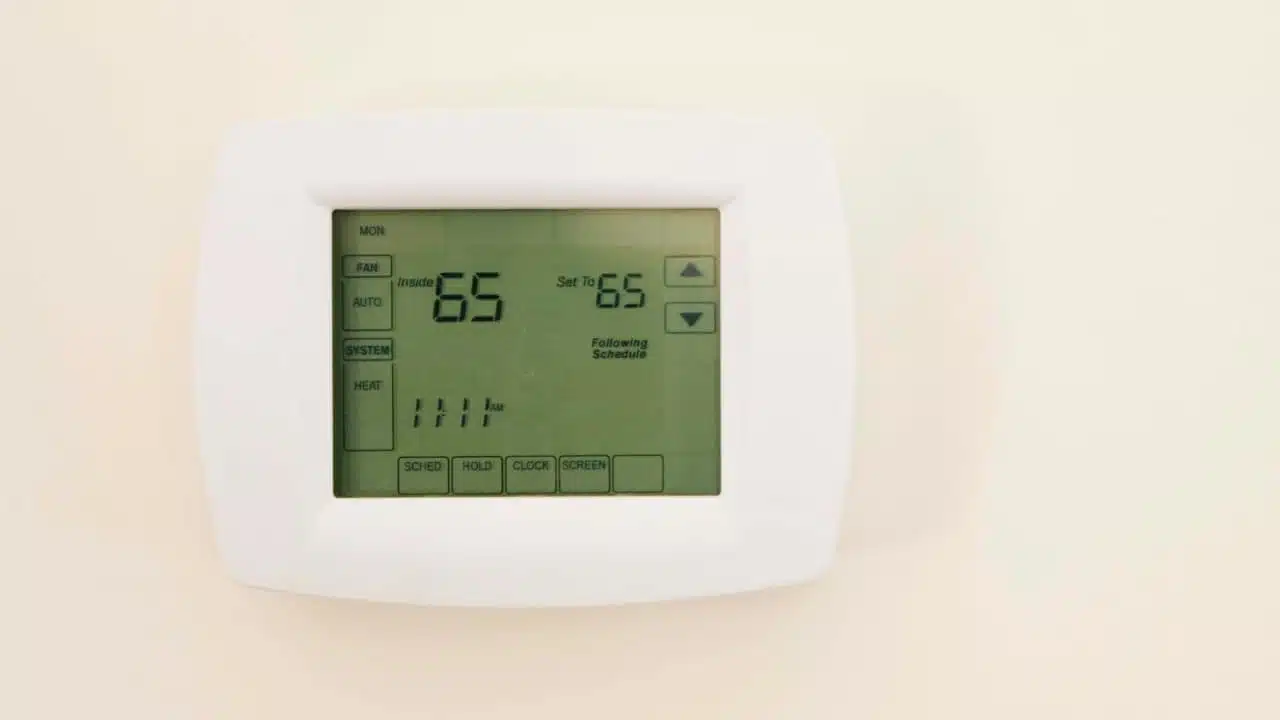
The first is about where to set the thermostat in summer. Some utilities and contractors suggest setting the thermostat no more than about 20 degrees below the outdoor temperature on very hot days. It's an energy and comfort guideline, not an equipment limit.

The second is how much the air cools as it passes through the system. In cooling mode, technicians compare the air going into the return grille with the air coming out of the supply registers, a difference called the temperature split. Many use a range in the mid-teens up to about 20 degrees as a rough first check.

The third is how much the heat pump warms the air in winter. In heating mode, technicians compare the air going into the return grille with the warmer air coming out of the supply registers, a difference called the temperature rise. Some people expect it to be about 20 degrees, but a heat pump's temperature rise doesn't hold steady at any one number.

None of these comes from a single published standard that applies to every heat pump. The right number for a given system comes from the manufacturer's installation data and the conditions on the day it's measured.

The cooling guideline: thermostat vs. outdoor temperature

The cooling guideline says to keep the thermostat within about 20 degrees of the outdoor temperature on very hot days, and it's meant to save energy and keep expectations realistic rather than to protect the equipment.

A cooling system is sized to hold a comfortable indoor temperature on a typical hot day for the area, not to produce any temperature you ask for. On an extreme afternoon, a system set far below the outdoor temperature may run nonstop without reaching the setpoint. That isn't automatically a malfunction. It can simply mean the heat coming into the house matches what the system can remove.

The guideline is a reasonable starting point for setting expectations. It isn't a test. A system that holds 75 degrees on a 105-degree afternoon isn't breaking a rule, and one that can't hold 85 isn't necessarily low on refrigerant. If a system that used to keep up no longer does under similar conditions, that change is what's worth checking.

The cooling split across the indoor coil

The cooling split is the temperature difference between the air entering the indoor coil and the air leaving it, and it's a useful clue rather than a verdict.

A split in roughly the mid-teens to about 20 degrees is a common rule of thumb, but the correct target depends on indoor humidity, airflow, and the system's design. Humid air uses more of the system's capacity to remove moisture, so the temperature drops less. Low airflow from a dirty filter or a restricted return can push the split higher because less air is moving across a cold coil, which can look like a strong system when the system is actually starved for air.

That's why technicians don't stop at the split. They also check airflow, refrigerant pressures, and temperatures, and compare all of it to the manufacturer's charts. A split that's off is a reason to look closer, not a diagnosis by itself.

Heat pump temperature rise in heating mode

In heating mode, a heat pump's temperature rise changes with the outdoor temperature and the system's output, so no single number fits every heat pump or every day.

A gas furnace burns fuel and can deliver very warm air. A heat pump moves heat from outdoor air into the house, so the air coming out of the registers usually feels cooler to the hand than furnace air, even when the system is heating normally. That difference alone causes plenty of service calls that turn out to be nothing wrong.

Several things move the reading:

  • Outdoor temperature. As it gets colder outside, there's less heat to collect, and the rise across the coil typically shrinks.
  • Variable-speed and multi-stage equipment. Many newer heat pumps slow down in mild weather and run longer at lower output. That lowers the rise on purpose and usually improves comfort and efficiency.
  • Airflow. The U.S. Department of Energy says heat pumps typically need about 400 to 500 cubic feet per minute of airflow per ton, and that performance falls off when airflow drops much below 350. Low airflow raises the temperature of the air coming out while delivering less total heat.
  • Defrost. During a defrost cycle, the system briefly stops heating the indoor air, and the reading drops until it switches back.

A thermometer reading taken once, on one day, can't separate these effects from a real problem.

When backup heat changes the reading

Backup heat raises the supply air temperature, so a reading taken while it's on says little about how well the heat pump itself is working.

Most heat pumps in forced-air systems have auxiliary heat, usually electric heating elements in the air handler. Bryant, a Carrier company, describes it as a supplemental source that turns on automatically when the heat pump can't meet the home's heating demand, including in very cold weather, during defrost, and after a large thermostat increase. Emergency heat is different: it's a manual setting that runs the backup heat on its own when the heat pump shouldn't operate.

When auxiliary heat runs, the air at the registers can feel noticeably warmer, and the temperature rise jumps. That makes a heat pump look stronger than it is, and it costs more to run. The Department of Energy notes that setting back a heat pump's thermostat can make the system operate inefficiently, and that thermostats designed for heat pumps use special logic to limit backup electric heat.

If your thermostat shows auxiliary heat often in mild weather, that's worth having checked. It can mean the thermostat isn't set up correctly for a heat pump, or that the heat pump isn't delivering its full output.

How air duct problems skew the numbers

Air duct problems can make a healthy heat pump look weak, because the temperature you feel at a register isn't the same as the temperature leaving the equipment.

ENERGY STAR estimates that about 20 to 30 percent of the air moving through a typical duct system is lost to leaks, holes, and poorly connected ducts. When ducts run through an attic, the heated air can lose temperature on its way to the rooms, and leaky return ducts can pull attic air into the system. A reading taken at a register far from the air handler may show a much smaller rise than one taken at the equipment.

That's why the location of the measurement matters. A technician measures right at the air handler to see what the heat pump is producing, then compares it with readings at the registers to see what the ducts are losing. If the equipment is fine but the registers are cool, the fix is in the ducts, not the heat pump.

What this means for Sacramento heat pumps

In the Sacramento region, the cooling guideline matters more than the heating numbers, because heat pumps here spend most of their hardest hours keeping up with summer heat.

On the hottest afternoons in Sacramento, Roseville, Elk Grove, and Folsom, a system set far below the outdoor temperature may run steadily without reaching the setpoint, and the 20 degree cooling guideline helps set realistic expectations on those days. Winters are mild by comparison, so many heat pumps here spend much of the heating season running at partial output, when the temperature rise is smallest. A modest rise on a mild morning is usually normal.

Duct location adds to it. California homes rarely have basements, so in many Sacramento-area homes the air handler and ductwork sit in the attic, the space with the biggest temperature swings in the house. That makes duct losses a common reason register readings look low in winter and air feels weak in summer.

When to call a technician

Call for service when the comfort in your home changes, not when a thermometer reading misses a number you read online.

Signs worth a call:

  • The house no longer reaches the thermostat setting in conditions it used to handle
  • Auxiliary heat shows up often in mild weather
  • Air at the registers is cool in heating mode for more than a few minutes outside of a defrost cycle
  • Ice builds on the indoor coil or refrigerant lines in cooling mode
  • Some rooms have always lagged behind others

A licensed HVAC contractor checks the system the way the manufacturer intends: measuring airflow, refrigerant pressures and temperatures, the temperature change at the equipment, and duct performance, then comparing them with the manufacturer's data. The result can't be promised in advance, because it depends on what the measurements show.

Treat the numbers as clues, not a pass or fail test

The 20 degree rule is three different rules of thumb, and none of them is a reliable test of a heat pump on its own. The cooling guideline helps set expectations on extreme days. The cooling split and the heat pump temperature rise are clues a technician uses alongside airflow, refrigerant, and duct measurements. If your system's comfort has changed, regular HVAC service that compares real measurements to the manufacturer's data will tell you more than any single number.

Frequently Asked Questions

Should I set my thermostat 20 degrees below the outdoor temperature?

On very hot days, keeping the thermostat within about 20 degrees of the outdoor temperature is a reasonable guideline for comfort and energy use. It isn't an equipment limit. Many systems can hold a lower setting, and on extreme days some can't reach a setting 20 degrees below. A change in how well your system keeps up, compared with past summers, matters more than the guideline itself.

What should the temperature difference be between supply and return vents?

It depends on the mode, the equipment, and the conditions. In cooling, many technicians use a split in roughly the mid-teens to about 20 degrees as a first check, adjusted for humidity and airflow. In heating, a heat pump's rise changes with outdoor temperature and output. The correct target for your system comes from the manufacturer's data, measured at the equipment.

Why does my heat pump blow lukewarm air?

Heat pumps deliver air that's cooler to the touch than a gas furnace's, even when they're working normally, and many run at low output in mild weather. Lukewarm air can also come from a defrost cycle, low airflow, a refrigerant problem, or duct losses. If the house stays comfortable, lukewarm air is usually normal. If the house falls behind, have it checked.

Is it bad if my auxiliary heat comes on?

Not by itself. Auxiliary heat is designed to help during very cold weather, defrost cycles, and big thermostat increases. It does cost more to run than the heat pump. If it runs often in mild weather, the thermostat may not be set up correctly for a heat pump, or the heat pump may not be delivering its full output.

Can leaky ducts make my heat pump seem like it's failing?

Yes. Air duct problems such as leaks, disconnected runs, or crushed flex duct can lose heat before it reaches the rooms, so register readings look weak even when the equipment is fine. ENERGY STAR estimates 20 to 30 percent of duct airflow is lost in a typical system. Measuring at the equipment and at the registers shows which part needs attention.

Does a heat pump need a different thermostat than a furnace?

Often, yes. The Department of Energy notes that setting back a heat pump in heating mode can make it run inefficiently, and that thermostats designed for heat pumps use special logic to limit backup electric heat. A thermostat set up for a furnace may call for backup heat more often than needed. A technician can confirm the thermostat is configured for your system.

Furnace Smells Explained: What's Normal and When to Call for Assistance

 Quick Answer: A light furnace burning smell when the heat first comes on is usually dust burning off, and it should fade within a few hours. A rotten-egg smell can mean a gas leak: leave the house and call 911 or your gas utility from outside. Burning plastic, electrical, or smoky odors mean turn the furnace off and call for service.

Key Takeaways

  • Dust burning off after months of sitting idle is normal and should fade within a few hours.
  • A rotten-egg or sulfur smell means possible natural gas. Leave first, then call from outside.
  • Burning plastic, hot metal, or electrical odors point to an overheating part. Turn the furnace off and have it checked.
  • Carbon monoxide has no smell, so a working CO alarm matters more than your nose.

A furnace burning smell when the heat first comes on in fall is usually harmless. Dust settles on the burners and heat exchanger over the summer, and the first few heating cycles burn it off. The trouble is that a few dangerous smells can start out faint, so it helps to know what each one usually means and what to do about it.

Clarke & Rush provides furnace repair across the Sacramento region, including furnaces that give off an odor that won't fade. The guide below works from the most urgent smell to the least, so start at the top if you're not sure what you're smelling.

If you smell gas, leave the house first

A rotten-egg or sulfur smell can mean natural gas is leaking, and the right response is to get everyone out of the house before doing anything else.

Natural gas has no odor of its own. Utilities add a sulfur-smelling chemical so leaks can be noticed. PG&E's gas safety guidance if you smell gas is to leave the area immediately, avoid using light switches, phones, or anything that could create a spark on the way out, and call 911 once you're a safe distance away. You can also report the leak to PG&E at 1-800-743-5000. Carrier gives the same advice: leave, and contact the gas utility before anyone attempts repairs.

Don't try to find the leak, turn the furnace off at the thermostat, or open the furnace cabinet. Flipping a switch can create a spark. Once the utility or fire department says the house is safe, a gas leak at the furnace itself calls for emergency furnace repairs before the system runs again.

The smell you can't detect: carbon monoxide

Carbon monoxide is the most dangerous gas a furnace can produce, and it has no smell at all, so a working CO alarm is your only reliable warning.

A gas furnace produces carbon monoxide as a normal part of combustion and sends it outside through the flue. The EPA lists leaking furnaces and chimneys as indoor sources of carbon monoxide and notes that worn or poorly maintained combustion equipment can release it. Early symptoms, including headache, dizziness, nausea, and fatigue, are easy to mistake for the flu.

If a CO alarm sounds, the U.S. Consumer Product Safety Commission's advice is to get outside immediately and call 911 from a fresh-air location. CPSC recommends CO alarms on every level of the home and outside each sleeping area. Smells don't warn you about carbon monoxide, but some odors, such as exhaust or a sharp smoky smell near the furnace, can come from the same venting problems that let it escape. Treat those as a reason to shut the furnace down and call.

Normal furnace smells: dust and a new filter

Dust burning off is the one burning smell that's expected, and it should fade on its own within a few hours of the first heating cycles.

Over the warm months, dust collects on the burners, the heat exchanger, and inside the cabinet. When the burners light for the first time in the fall, that dust heats up and gives off a dry, slightly scorched odor. Carrier says the smell is typically temporary and can last from about 30 minutes to a few hours.

A brand-new filter or new equipment can also smell a little for the first day or two as coatings and packaging residue warm up. Opening a window briefly helps clear it.

The test is simple: a normal dust smell gets weaker with each cycle. If it lingers past a few hours, gets stronger, or comes back every time the furnace runs, it's no longer dust burning off.

Burning plastic, electrical, or hot metal smells

A smell like burning plastic, hot metal, or overheated wiring usually means a part is overheating, and the furnace should be turned off until it's inspected.

Carrier notes that faulty wiring or an overheated component can smell like burning plastic, and that in a furnace the source can be an overheated blower motor, often from heavy dust buildup or a clogged filter. A smell like hot metal can also point to an electrical problem or a failing motor. Other causes include a failing motor bearing, a loose wire connection that's arcing, or something that fell into a vent and is sitting against a hot surface.

Turn the furnace off at the thermostat, then switch off its power at the furnace switch or breaker if you can do so safely. Check the supply registers near the smell for a toy, a plastic bag, or debris, but don't open the furnace cabinet. If you see smoke or visible flame, leave the house and call 911.

SmellWhat it usually meansWhat to do
Rotten eggs or sulfurPossible natural gas leakLeave immediately; call 911 or PG&E from outside
Dry, dusty burning that fadesDust burning off after the furnace sat idleNormal; let it run an hour or two
Burning plastic or electricalOverheating motor, wiring, or an object in a ventTurn the furnace off; call for service
Hot metalOverheating part or a failing motorTurn the furnace off; call for service
Smoke or exhaustPossible venting problem or blocked flueTurn the furnace off; ventilate; call for service
Musty or mildewMoisture in the system or ductsNot urgent; schedule an inspection
Persistent dirty-sock or stale odorDust, debris, or microbial growth in ducts or on the coilNot urgent; check filter, schedule service

Smoky, exhaust, or chemical odors

A smoky or exhaust odor near the furnace can mean combustion gases aren't venting outside the way they should, which is a reason to shut the furnace off and have the venting checked.

A gas furnace sends its exhaust up a flue or out a vent pipe. A bird's nest, debris, a disconnected vent section, or a cracked heat exchanger can let some of that exhaust back into the house. The smell is different from dust: it's sharper, it doesn't fade, and it's often strongest near the furnace itself. Because the same problems can also leak carbon monoxide, which has no smell, an exhaust odor is worth taking seriously even if your CO alarm is quiet.

Turn the furnace off, open a few windows, and call for service. If anyone in the house has a headache, dizziness, or nausea that eases when they step outside, leave and call 911.

Musty and stale smells point to moisture or dust

Musty, mildew, or stale smells from the vents aren't usually dangerous, but they mean moisture, dust, or debris is building up somewhere in the system.

Many homes share one blower and duct system between the furnace and the air conditioner. The AC coil sits right on top of the furnace and collects condensation all summer, and a clogged drain pan or a damp duct can grow mildew. When the heat comes on, warm air carries that odor through the house. More on the causes is in why your HVAC smells musty when it's turned on.

These odors are a sign of indoor pollutants circulating with the heated air: dust, mold spores, pet dander, and other particles the filter isn't catching. A fresh filter is the first step. If the smell continues, a technician can check the coil, drain pan, and ducts, and address air quality with better filtration or in-duct air cleaning.

How Sacramento homes collect dust and odors in summer

In the Sacramento region, furnaces and ducts tend to start the heating season dustier than the furnace's own months of rest would suggest, which makes a stronger first-cycle smell more likely.

California homes rarely have basements, so many furnaces in Sacramento, Roseville, Elk Grove, and Folsom sit in an attic, closet, or garage. In homes where the furnace and air conditioner share a blower and filter, that filter has worked through months of cooling-season dust before the first heating call. Wildfire smoke adds to the load in some summers, and smoke particles caught in the filter or settled on surfaces can give off a faint smoky odor when the heat first comes on.

That's why a fall filter change and a short test run on a mild afternoon are worth doing before the first cold night. A professional furnace cleaning during a fall tune-up removes much of the dust that causes the first-cycle smell and gives a technician the chance to check the burners, flame sensor, and venting while the furnace is still lightly used. The EPA recommends having a trained professional inspect, clean, and tune up central heating systems, including furnaces and flues, every year.

When to call for help, and how fast

How quickly you need help depends on the smell, from a 911 call for gas to a routine appointment for a musty odor.

  • Call 911 or the gas utility right away: rotten-egg or sulfur smell, a sounding CO alarm, smoke, or visible flame.
  • Turn the furnace off and call the same day: burning plastic, electrical, hot metal, or exhaust odors.
  • Schedule service soon: a dust smell that won't fade after a few hours, or a burning smell that returns every cycle.
  • Schedule an inspection: musty, mildew, or stale odors with no other symptoms.

When you call, describe the smell, when it started, whether it happens every cycle or only at startup, and where in the house it's strongest. That detail helps a technician narrow the cause before arriving.

Most furnace smells in the fall are dust burning off, and they fade on their own. The ones that don't fade are the furnace telling you something is wrong. Rotten eggs mean get out and call from outside. Burning plastic, electrical, hot metal, or exhaust smells mean turn the furnace off and have it inspected before it runs again. A yearly cleaning and a working CO alarm cover most of the rest. When an odor doesn't add up, Clarke & Rush handles furnace repair throughout the Sacramento region.

Frequently Asked Questions

How long should a furnace smell like burning after turning it on?

A dust smell from the first heating cycles of the season usually fades within a few hours. Carrier puts the range at about 30 minutes to a few hours. A furnace burning smell that lasts longer, gets stronger, or returns every cycle isn't dust anymore and should be checked by a technician.

Is it safe to stay home if my furnace smells like burning?

If it's the dry, dusty smell of the first cycles and it's fading, yes. If it smells like burning plastic, hot metal, or wiring, turn the furnace off and stay out of the furnace area until it's inspected. If you see smoke or flame, or smell rotten eggs, leave the house and call 911 or your gas utility from outside.

Why does my furnace smell like rotten eggs?

Natural gas is odorless, so utilities add a sulfur-smelling chemical that makes leaks noticeable. A rotten-egg smell near the furnace or anywhere in the house can mean gas is leaking. Leave right away without using light switches or phones, and call 911 or PG&E at 1-800-743-5000 once you're outside and a safe distance away.

Can a dirty filter cause a burning smell?

Yes. A clogged filter cuts airflow, which can make the blower motor and the heat exchanger run hotter than normal. Carrier notes that an overheated blower motor, often linked to dust buildup or a clogged filter, can smell like burning plastic. Replacing a dirty filter is a good first step, but a burning plastic smell still means turning the furnace off until it's checked.

Can I smell carbon monoxide from my furnace?

No. Carbon monoxide has no color and no smell, which is why the CPSC recommends CO alarms on every level of the home and outside each sleeping area. Some venting problems that release carbon monoxide also produce an exhaust or smoky odor, but you can't count on smelling anything. If a CO alarm sounds, get outside and call 911.

Does furnace cleaning get rid of furnace smells?

A professional cleaning removes much of the dust on the burners and inside the cabinet that causes the first-of-the-season smell. It won't fix an electrical problem, a gas leak, or a moldy duct, but it gives a technician the chance to spot those problems during the same visit. The EPA recommends an annual professional inspection, cleaning, and tune-up of central heating systems.

Is Your Thermostat Failing, or Is the Problem with Your Heating System?


Quick Answer:
To tell a thermostat problem from a heating system problem, raise the setpoint a few degrees and watch the equipment. If nothing happens, the thermostat, its power, or its wiring is the likely cause. If the equipment starts and then quits, or runs without heating, the thermostat did its job, and then you will need to schedule  HVAC service.

Key Takeaways

  • A thermostat only sends a signal. If the equipment answers that signal, the thermostat is usually working.
  • A blank screen is most often dead batteries or lost power, and lost power can start at the furnace, not the thermostat.
  • A furnace or heat pump that starts but doesn't heat has a problem in the equipment, ducts, or airflow.
  • Some faults, like a tripped drain switch or an open furnace door switch, make a working thermostat look dead.

You can usually tell whether the thermostat or the heating system is at fault in a few minutes, by checking whether the equipment responds when the thermostat calls for heat. That one check sorts most cases. The rest of thermostat troubleshooting is narrowing down why the signal isn't getting through, or why the equipment isn't doing anything useful with it.

Both problems leave the house cold, but they lead to very different fixes. Clarke & Rush handles HVAC repair across the Sacramento region, including no-heat problems on both sides of the thermostat wire.

The quick test: does the equipment respond?

The fastest way to separate a thermostat fault from a heating system fault is to raise the setpoint and listen at the equipment. A thermostat is a switch with a temperature sensor. When the room drops below the setpoint, it closes a low-voltage circuit, usually powered by a transformer in the furnace or air handler, and the equipment takes it from there. Everything after that signal, including ignition, heat, airflow, and safety shutdowns, belongs to the heating system.

  1. Set the thermostat to HEAT and the fan to AUTO.
  2. Raise the setpoint three to five degrees above the current room temperature.
  3. Go to the furnace or air handler and listen for a minute or two. On a gas furnace you should hear the draft inducer fan, then the ignitor, then the burners and blower. On a heat pump, the outdoor unit should start and the indoor blower should run.

If nothing happens at all, the call for heat probably isn't reaching the equipment, and the thermostat, its power, or its wiring moves to the top of the list. If the equipment starts its sequence, the thermostat is doing its job. Whatever happens next, such as burners that light and go out, a blower that runs with no heat, or an outdoor unit that runs while the house stays cold, is a heating system problem.

Signs the thermostat is the problem

The thermostat is the likely problem when the screen is blank or frozen, the temperature reading doesn't match the room, or the equipment never responds to a change in settings.

The Clarke & Rush thermostat repair page lists the common causes:

  • A blank or unresponsive screen, often from dead batteries, a tripped breaker or blown fuse, or a wiring disconnect at the control board
  • A temperature reading that's off because the thermostat sits in direct sun or near a vent, has dust in its sensor, or has drifted out of calibration
  • A system that doesn't respond, from loose wiring, a faulty relay, or a smart thermostat that isn't compatible with the equipment
  • Short cycling or nonstop running from a bad sensor, poor placement, or a communication problem

Settings can mimic a fault too: a thermostat on COOL or OFF, a schedule that lowered the setpoint, or a fan set to ON, which blows room-temperature air between heating cycles.

When a Honeywell display goes blank

A Honeywell thermostat blank screen usually means the thermostat has lost power, and Honeywell's own steps start with the simplest fix.

Honeywell's support guidance for blank displays works through it in order. If the thermostat runs on batteries, replace them. If it's wired for continuous power from the heating system, try putting batteries in to see whether the screen comes back. If it powers up on batteries, the thermostat is probably fine and the system isn't sending it power, so check the breaker, the furnace power switch, and the furnace door switch. If it won't power up even with fresh batteries, or it only works on batteries while the system has power, Honeywell says you may need a technician.

The same logic applies to most digital thermostats: a blank screen points to power first, and the power problem often starts at the furnace or air handler.

Signs the problem is in the furnace

A gas furnace is the likely problem when the thermostat calls for heat, the furnace starts its sequence, and then it fails to light, shuts off early, or blows cool air.

A furnace not heating properly while the thermostat works fine usually traces to the furnace's own parts. The Clarke & Rush furnace repair page names the common ones: a failed ignitor, a dirty flame sensor that shuts off the gas within seconds of ignition, a tripped limit switch from a clogged filter and restricted airflow, an interrupted gas supply, or a safety switch that has shut the furnace down on purpose.

Burners that light and go out within seconds point toward the flame sensor. A furnace that runs a few minutes and shuts off with the blower still going points toward overheating and airflow. A blinking status light on the control board often gives a code; many furnaces print the code chart inside the door.

If you smell gas, don't troubleshoot. Leave the house, and call 911 or your gas utility from outside.

Signs the problem is in the heat pump

A heat pump is the likely problem when the outdoor unit and indoor blower run but the house doesn't warm up, the outdoor unit stays covered in ice, or backup heat runs constantly.

Common heat pump problems listed on the Clarke & Rush heat pump repair page include refrigerant leaks, a failed reversing valve that leaves the system stuck in cooling, defrost control failures, thermostat faults, and compressor issues. Restricted airflow and faulty sensors can also cause icing.

Heat pump air feels cooler to the hand than a gas furnace's, even when it's heating normally, so lukewarm air isn't proof of a problem. A house that falls behind the thermostat is. Thermostat setup also matters more with a heat pump: one configured for the wrong system type can call for cooling when it should heat, or bring on backup heat more often than needed.

Problems that can look like either one

Some faults sit between the thermostat and the heating system, and they make a working thermostat look broken or a working furnace look dead.

The most common is lost low-voltage power. The 24-volt circuit that powers many thermostats starts at a transformer in the furnace or air handler and passes through switches that can cut it:

  • The furnace door safety switch cuts power when the blower compartment panel isn't fully seated, which often happens after a filter change.
  • On some systems, a float switch in the condensate drain pan cuts power when the drain backs up, to keep water from overflowing. The thermostat goes blank, and the real problem is a clogged drain line.
  • A small fuse on the furnace control board can blow when a thermostat wire shorts, which can cut power to the thermostat until the fuse and the short are fixed.
  • A loose or damaged thermostat wire anywhere between the wall and the equipment can interrupt power or the call for heat.

A thermostat that works on batteries but not on system power is a useful clue: the thermostat is probably fine, and the power problem is upstream.

This quick guide shows which side of the system each common symptom usually points to.

What you noticeLikely sideCommon causes
Screen blank or frozenThermostat or its powerDead batteries, tripped breaker, furnace door switch, drain float switch, blown control fuse
Screen works, equipment never startsThermostat, wiring, or controlsWrong mode, wiring fault, failed relay, incompatible smart thermostat
Reading doesn't match the roomThermostatSun or vent nearby, dust, calibration drift
Furnace starts, then shuts off or blows cool airFurnaceIgnitor, flame sensor, limit switch, airflow, gas supply
Heat pump runs, house stays coldHeat pumpRefrigerant leak, reversing valve, defrost failure, airflow
Backup heat runs often in mild weatherThermostat setup or heat pumpConfiguration, or a heat pump not delivering full output

What makes this harder to sort out in Sacramento homes

In the Sacramento region, the equipment and its switches are often in the attic, which makes the problems that cut thermostat power harder to spot from inside the house.

California homes rarely have basements, so many furnaces and air handlers in Sacramento, Roseville, Elk Grove, and Folsom sit in an attic, a garage, or a closet. When the equipment is in the attic, a clogged condensate drain or a tripped float switch is out of sight, and the only symptom downstairs may be a blank thermostat. The Clarke & Rush furnace repair page notes that an attic furnace spends the summer in extreme heat even when it isn't running, which is hard on wiring and electronic components, so the first heating call of the season is a common time for these problems to surface.

A home that recently switched from a furnace to a heat pump, which SMUD and Roseville Electric incentives encourage, may also still have a thermostat that isn't set up for it.

Safe checks to try first

These checks are safe for any homeowner and don't require opening the furnace's burner compartment or the electrical panels inside the equipment.

  1. Confirm the thermostat is set to HEAT, the setpoint is above room temperature, and the fan is on AUTO.
  2. Replace the thermostat batteries if it uses them, even if the screen still shows something.
  3. Check the breaker for the furnace or air handler, and the power switch near the equipment, which often looks like a light switch.
  4. Make sure the blower compartment door on the furnace or air handler is fully closed.
  5. Look for water around the indoor unit or a full drain pan, which can point to a tripped float switch.
  6. Replace the air filter if it's dirty.
  7. Run the quick test above and note whether the equipment responds.

Don't open the thermostat's wiring, the furnace control board, or the burner area, and don't bypass any switch. If these checks don't restore heat, the problem needs a technician with a meter.

When to call for HVAC repair

Call for service if the thermostat stays blank with fresh batteries and the breakers on, the equipment never responds to a call for heat, the furnace starts and then shuts down, the heat pump runs without warming the house, or you find water around the indoor unit.

When you call, say what the thermostat shows, whether the equipment responds when you raise the setpoint, and what you hear or see at the furnace or outdoor unit. Those details tell a technician which side of the system to start on.

Start with the signal, then follow the equipment

The thermostat and the heating system fail in different ways, and the equipment's response tells you which one to look at. A blank or ignored thermostat usually means a power or wiring problem, and that problem often starts at the furnace. Equipment that starts but doesn't heat points to the furnace or heat pump itself. A few minutes of checking batteries, breakers, the furnace door, and the filter can save a service call, and when it doesn't, it gives a technician a head start on the HVAC repair.

Frequently Asked Questions

Why is my thermostat screen blank?

A blank screen usually means the thermostat has lost power. Start with fresh batteries if it uses them. If it's wired for system power, check the breaker, the furnace power switch, and the furnace door panel. On some systems, a full condensate drain pan trips a switch that cuts power to the thermostat. If the screen stays blank after those checks, a technician should test the wiring and controls.

How do I know if my thermostat is bad?

Raise the setpoint a few degrees and see whether the heating equipment starts. If the screen works but the equipment never responds, and power, settings, and breakers check out, the thermostat or its wiring may have failed. A reading that doesn't match a separate thermometer, or a thermostat that restarts on its own, are other signs. A technician can confirm it by testing the signal at the equipment.

Can a bad thermostat make my furnace stop heating?

Yes. A thermostat that loses power, misreads the room, or has a wiring fault can stop calling for heat or end heating cycles early. But a furnace not heating while the thermostat calls for heat normally is usually a furnace problem, such as a failed ignitor, a dirty flame sensor, or a tripped limit switch. Watching whether the furnace starts tells you which one to look at.

Why does my heat pump run but the house stays cold?

The heat pump may have a refrigerant leak, a reversing valve stuck in cooling, a defrost problem, or restricted airflow. It may also be working normally on a mild day, since heat pump air feels cooler than furnace air. If the house can't reach the thermostat setting, or the outdoor unit stays iced over, have the system checked. These heat pump problems need a technician's tools to diagnose.

Should I replace my thermostat if it's old?

Age alone isn't a reason, but replacement is worth considering for thermostats 10 to 15 years old, units with repeated failures, damaged screens, or smart thermostats that aren't compatible with the equipment. A new thermostat won't fix a furnace or heat pump problem, so confirm where the problem is before buying one.

Does a smart thermostat need special wiring?

Many do. Smart thermostats often need a common wire, called a C-wire, to supply continuous power from the heating system. Without one, some models lose power, restart, or drain their batteries. If a new smart thermostat goes blank or behaves erratically, the wiring is one of the first things to check. A technician can add a C-wire or an adapter where needed.

Friday, 23 October 2026

Does Your Furnace Actually Need a Tune-Up This Year?


furnace

Quick Answer: A tune-up is worth scheduling if it's been over a year since your furnace was serviced, if you've noticed any of the warning signs below, or if you simply want the heat exchanger and safety controls checked before you're depending on the system daily. It's a preventive visit, not a repair, so don't wait for a symptom to show up before booking one. Do ask exactly what the technician will inspect, clean, test, and report back before you schedule.

Sacramento furnaces spend most of the year doing nothing. They sit through a long cooling season, then get asked to run every morning once temperatures drop, often with no warning beyond one cold night. That gap is exactly why a pre-cold snap check-in catches things a symptom-based repair call misses: small drift in a component, a filter that's been loading up since spring, or a part that's been quietly weakening while the system wasn't under any real load. This guide covers how to tell whether you really need one this year, what a technician is really checking for, and what's worth asking before you book.

What a Tune-Up Actually Covers

At a high level, a professional visit inspects the heat exchanger, burners, ignition system, blower assembly, electrical connections, thermostat operation, safety controls, and filtration area, cleans the components that need it, and runs the furnace through a full heating cycle to confirm it starts, heats, and shuts down normally. Clarke & Rush's full furnace tune-up checklist covers each of these in detail if you want the complete breakdown.

What a technician is looking for at each step matters more than the checklist itself. That's covered in this article.

The Warning Signs Worth Paying Attention To

You don't need to wait for a full breakdown to justify a service call. A few signs are worth acting on soon rather than waiting them out:

  • Rooms that never quite warm up, or heating that feels uneven room to room.
  • Airflow that feels weaker than it used to at the vents.
  • New noises, or a furnace that's noticeably louder than it was last winter.
  • Short cycling: the furnace turning on and off in quick bursts rather than completing a full heating cycle.
  • Rising energy bills with no obvious explanation.
  • A furnace that takes longer than it used to reach the temperature you set.

If any of those sound familiar, we've written more detailed breakdowns of the two most common ones: weak furnace airflow and a furnace blowing cold air.

A gas smell or a carbon monoxide alarm is a different category entirely, and it's not a schedule-it-for-next-week situation. If you smell gas near the furnace or anywhere in the home, PG&E's guidance is direct: leave the area immediately, avoid using light switches, phones, or anything that could create a spark on your way out, and call 911 once you're a safe distance away. You can also report the leak to PG&E directly at 1-800-743-5000.

What a Technician Is Actually Checking For

This is the part of a tune-up that's easy to undersell. It's not really about crossing items off a list. It's about catching the kind of drift that doesn't show up as a symptom yet.

The heat exchanger is the clearest example. A hairline crack often produces no noticeable symptom at all until it's already letting combustion byproducts into the air stream, which is why asking whether an inspection includes a camera scope or combustion analysis alongside a visual check is worth confirming directly. No single method catches everything on its own: a visual check can miss a hairline crack that's not yet visibly open, a camera scope sees physical condition but not combustion byproducts, and combustion analysis can flag a problem before it's visible at all. A technician checking the heat exchanger properly is looking for something a homeowner has no practical way to check themselves.

Smaller components tell a similar story. A limit switch that's starting to trip a few degrees earlier than it should, a blower motor pulling slightly more amperage than its rating, or a capacitor testing a little below its rated value won't stop the furnace from running today. Left alone, drift like that is often exactly what turns into a no-heat call during the first real cold week of the year, at which point it's a repair instead of a five-minute part swap.

There's also a Sacramento-specific reason this matters more here than in a lot of other climates. The blower and coil spend the entire cooling season pulling grass and orchard pollen, wildfire smoke, and road dust through the duct system, none of which shows up as a problem until the fan is asked to move air for hours at a stretch in January instead of a few minutes at a time in July. A pre-winter visit is the point where that summer's worth of buildup gets caught before it turns into restricted airflow or a strained blower motor.

Is a Tune-Up Worth Doing Every Year?

No maintenance visit can guarantee a furnace will never fail. What it can do is give a technician a real chance to catch a worn component, dirt buildup, an airflow restriction, or a safety concern while the system is still running normally, rather than after it's already down.

It also supports efficiency, though it's worth keeping expectations realistic. Restricted airflow and dirty components make a furnace work harder than it needs to, so cleaning and inspecting them helps, but a tune-up isn't a guaranteed fix for a high energy bill. Thermostat habits, insulation, ductwork condition, and outdoor temperatures all factor into that too.

What a Tune-Up Costs, and the Better Question to Ask

Homeowners often search for one standard number, but pricing varies by contractor, furnace type, service plan, seasonal promotion, and the condition of the equipment. It's also worth separating maintenance from repair upfront: a normal tune-up covers preventive inspection and service, and if a technician finds something that really needs fixing, that work is typically quoted separately rather than bundled in.

The more useful question isn't "what's the cheapest tune-up available." It's "what will the technician actually inspect, clean, test, and report back to me." A visit that skips the heat exchanger inspection or a combustion check isn't doing the same job as one that includes them, even if both get called a tune-up.

What to Ask Before You Book

A few questions upfront make it easier to know what you're paying for:

  • Does the visit include a camera inspection of the heat exchanger, or just a visual check?
  • Is combustion and carbon monoxide testing included?
  • Will the technician explain what they found and what it means, not just note a checkmark on the invoice?
  • If something needs repair, is that quoted separately before any work begins?
  • Does the visit include checking the blower assembly, not just the filter?

What You Can Check Between Visits

A few simple habits help without requiring you to open the furnace cabinet. Check the filter regularly and replace it when it's loaded. Keep boxes and clutter away from the unit. Make sure supply and return vents aren't blocked by furniture or rugs. And before the first genuinely cold morning of the season, turn the heat on and listen to a full cycle. If anything sounds, smells, or behaves differently than it did last winter, that's worth mentioning when you schedule service, not something to wait out.

Schedule It Before You're Depending on It

The best time to think about your furnace is before the first cold morning forces the question. Clarke & Rush has provided heating service throughout Sacramento since 1963, and our NATE certified technicians can tell you plainly what a furnace tune-up visit will actually cover before you book. Backed by over 2,000 five-star reviews from homeowners across the region, we'd rather answer a question honestly now than have you find out the hard way in January.

People Also Ask Questions about Furnace Tune-ups

Is a furnace tune-up the same as a furnace inspection?

No, though they overlap. An inspection is usually a narrower check, confirming the system is safe and operating within normal parameters. A tune-up typically includes that inspection plus cleaning, testing, and small adjustments like calibrating the thermostat or verifying gas pressure. Ask what's included either way, since contractors don't always use the terms consistently, and the actual scope of the visit matters more than which word is on the invoice.

How do I know if my furnace has already been serviced this year?

Check for a service sticker or tag first, often left on the furnace cabinet or door panel by the technician after a visit, along with the date. A paper or email receipt from a previous appointment works too. If you genuinely can't remember and have no record, it's reasonable to assume it's due, especially heading into the first cold stretch of the year.

Can a tune-up prevent a furnace from breaking down completely?

It reduces the odds significantly but can't guarantee it. A tune-up catches the kind of wear, dirt buildup, and component drift that commonly leads to breakdowns: a weakening part, a restricted filter, an early-tripping limit switch, before any of it becomes a full failure. It can't predict every possible failure, particularly a part that fails suddenly rather than gradually, but most of the furnace problems homeowners deal with each winter had warning signs a pre-winter visit would have caught.

What happens if a technician finds a problem during a tune-up?

A reputable technician will explain what they found, why it matters, and what your options are, then quote any needed repair separately from the tune-up itself. You shouldn't be surprised by work being done without being told first. If a part is worn but not yet failed, you'll often have the choice of replacing it now or monitoring it, depending on how close it is to the end of its useful life.

Does a furnace tune-up include checking the thermostat?

Yes, typically. A technician will usually confirm the thermostat is communicating properly with the furnace and that the startup and shutdown sequence is working as expected. This is a basic functional check rather than a deep dive into the thermostat itself, so if you suspect a specific thermostat problem, mention it directly so the technician knows to look closer at that part of the system.

Is it too late to schedule a tune-up once winter has started?

It's not too late, but it's less ideal. A tune-up done after the furnace has already been running daily for weeks can still catch developing problems, but it won't have the same head start as a pre-cold-snap visit done before the system is under regular use. If your furnace is currently working fine, scheduling now still beats waiting for a symptom to appear.

Do all furnaces need the same tune-up, regardless of age?

No. The core checklist is similar, but older furnaces generally warrant closer attention to the heat exchanger and ignition components, since wear accumulates with age and use. A newer furnace under warranty may also have manufacturer-specific maintenance requirements worth confirming, since skipping required maintenance can affect warranty coverage on some equipment.

Will a tune-up lower my energy bill?

It can help, but it's not a guaranteed fix for a high bill. A furnace with a clean filter, clear airflow, and properly functioning components generally runs more efficiently than one that's neglected. That said, energy bills are also affected by thermostat habits, insulation, ductwork condition, and outdoor temperatures, so a tune-up is one factor among several rather than a single lever.

What's the difference between a furnace tune-up and furnace maintenance?

In practice, none. These terms are usually used interchangeably by HVAC contractors. Both describe preventive service performed while the furnace is still working normally, as opposed to a repair visit, which addresses a problem that's already occurred. If a contractor draws a distinction between the two, ask them directly what separates their maintenance visit from their tune-up.

How long does a furnace tune-up appointment usually take?

Most furnace tune-up appointments run 60 to 90 minutes, depending on the age and condition of the system and whether the technician finds anything that needs a closer look. A furnace that hasn't been serviced in several years, or one with hard-to-access components, may take longer than a system that's been on a consistent annual schedule.

Sunday, 11 October 2026

How often should Sacramento homeowners change their furnace filter?


Most Sacramento homes need a new furnace filter every 30 to 90 days, and the exact number depends on filter thickness, how many people live in the house, and whether there are pets. A one inch fiberglass filter in a busy household can be loaded with debris in a month. A four inch pleated air filter in a quiet two person home can go six months or longer. The common advice to “change it every three months” is a starting point that fits almost nobody exactly.

This matters more here than it does in milder climates. Sacramento runs a long dry season with valley dust, Delta breeze grit, almond and oak pollen in spring, and wildfire smoke that can settle over the region for days at a time in late summer. Then the furnace starts running in November and pulls all of that through the return. Clarke & Rush has been working on Sacramento heating systems since 1963, and a clogged filter is still one of the most frequent causes behind the service calls that start with “my heat feels weak.”

What the filter actually does

A furnace filter protects the equipment first and the air second. Every cubic foot of air your system heats passes through the return, hits the filter, then moves across the blower motor and the heat exchanger before it reaches your rooms. The filter catches lint, indoor dust, skin cells, pet hair, and pollen before they coat those parts.

When the filter loads up, it stops being a screen and starts being a wall. Air still has to move, so the blower motor works harder to pull the same volume through a smaller opening. That is restricted airflow, and it drives almost every symptom homeowners notice later.

What happens if you don’t change your furnace filter

The sequence is predictable. First you get weak airflow at the registers, usually in the rooms farthest from the furnace. Then rooms stop holding an even temperature and the system runs longer cycles to reach the thermostat setting, which raises the gas bill without raising comfort.

Inside the cabinet, restricted airflow means the heat exchanger does not shed heat fast enough. The high limit switch trips and shuts the burners down while the blower keeps running. That is short cycling, and it is hard on ignition components. Over a full season, the blower motor runs hot, bearings wear faster, and a motor that should last fifteen years fails in eight.

Dust that gets past a collapsed or bypassed filter settles on the blower wheel and the evaporator coil above the furnace. A coated blower wheel moves less air even after you put in a clean filter. At that point the fix is a cleaning during a furnace tune-up, not a trip to the hardware store.

Furnace filter replacement schedule by type

Filter thickness changes the answer more than any other factor. A thicker filter has more surface area, so it holds more debris before airflow suffers.

One inch fiberglass filter. The flat blue or green panel sold for a couple of dollars. It catches large lint and protects the equipment, and very little else. Replace it every 30 days during heating season. Do not try to stretch it. It has almost no dust holding capacity and it goes from clean to restrictive quickly.

One inch pleated air filter. The accordion folded media in a cardboard frame, usually MERV 8 to MERV 11. This is what most Sacramento homes have. Plan on 60 to 90 days, closer to 60 if the furnace runs daily through a cold snap.

Two inch pleated. Roughly 90 days, sometimes a bit longer in a low occupancy home.

How often to change a 4 inch furnace filter

Four and five inch media filters sit in a dedicated cabinet next to the furnace and hold several times the debris of a one inch panel. Manufacturers generally rate them for six to twelve months. In Sacramento, I would inspect at four months and plan to replace at six, with a hard stop at nine. The deep pleats hide loading well, so the filter can look acceptable at a glance while airflow has already dropped.

Whole house electronic and media cabinets vary by brand, so check the label inside the cabinet door rather than guessing.

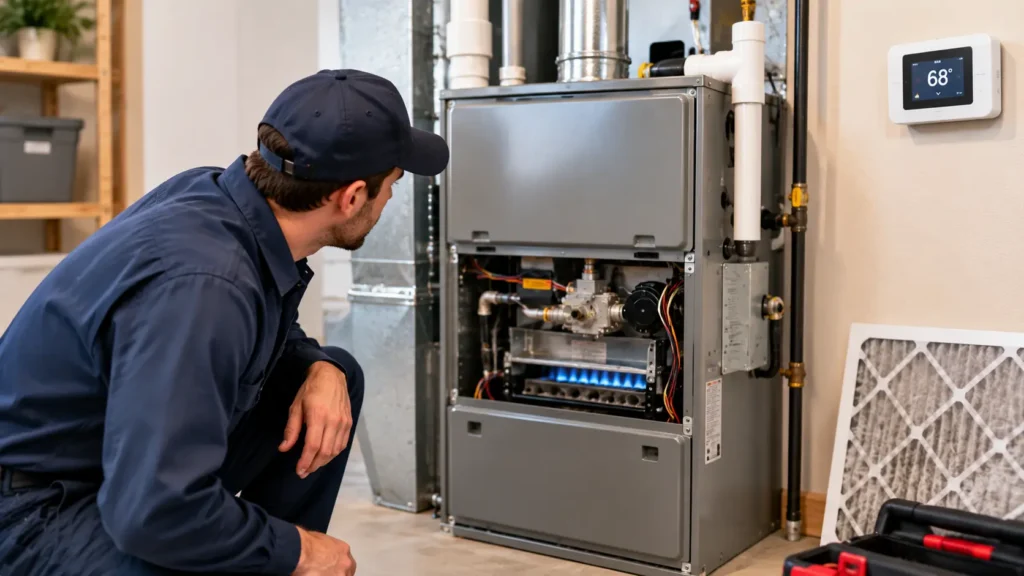
image 1

What shortens the interval in a Sacramento home

Home occupancy drives filter life as much as anything. Two adults who work away from the house all day load a filter slowly. Five people at home, a dog, and a door that opens twenty times a day will cut that interval roughly in half.

Pet hair is the single biggest accelerator. Shedding dogs and cats put hair and dander into the return constantly, and hair mats on the filter face instead of embedding in the media, so it blocks airflow faster than fine dust does. Households with two or more shedding pets should check a one inch filter at 30 days.

Construction dust belongs in its own category. Drywall sanding, flooring removal, and attic work produce fine particulate that will load a filter in days. If you are remodeling, change the filter after the dusty phase ends regardless of how long it has been installed. Keep a spare on hand. The same applies after a wildfire smoke event, when outdoor air pushes fine particulate into the house through every gap in the envelope.

Other things that shorten the interval: an older home with leaky ducts in a dusty attic or crawlspace, return grilles in a hallway that collects foot traffic, and running the fan in the “on” position instead of “auto,” which filters more air but loads the filter continuously.

Choosing between MERV 8, MERV 11, and MERV 13

MERV measures how much of the particulate passing through gets captured. Higher numbers catch smaller particles and also resist airflow more.

MERV 8 handles pollen, dust mites, and lint. It is easy on the blower motor and it is the safe default for older furnaces with modest blower capacity.

MERV 11 adds pet dander and finer dust. For most Sacramento homes with a pet or an allergy sufferer, this is the practical sweet spot in a one inch slot.

MERV 13 captures smoke particulate, bacteria, and the fine material that drifts in during fire season. It is the right call for respiratory sensitivity, with one condition. MERV 13 in a one inch slot on an older single stage furnace can starve the system. The pressure drop across the media is significantly higher, and a system designed around a MERV 8 panel may trip its limit switch on a cold morning.

The way around that is surface area. A four inch MERV 13 media cabinet gives you high filtration with low resistance because the pleats are deeper and the face area is larger. If you want MERV 13 and your furnace has a one inch slot, ask about adding a media cabinet during your next service visit rather than just buying a higher rated panel.

Can you run a furnace without an air filter

No, and the damage is not theoretical. Without a filter the return pulls raw dust straight onto the blower wheel, the heat exchanger, and the AC evaporator coil sitting in the plenum above. A dirty coil loses capacity in summer and can freeze. A dust coated blower wheel loses a measurable share of its airflow and has to be pulled and cleaned by hand.

Running with no filter for an hour while you drive to the store is not going to destroy anything. Running a full season that way will cost far more than the filters would have. If you cannot find the right size, a slightly thinner correct width filter taped into place beats an empty slot.

How to do a filter inspection properly

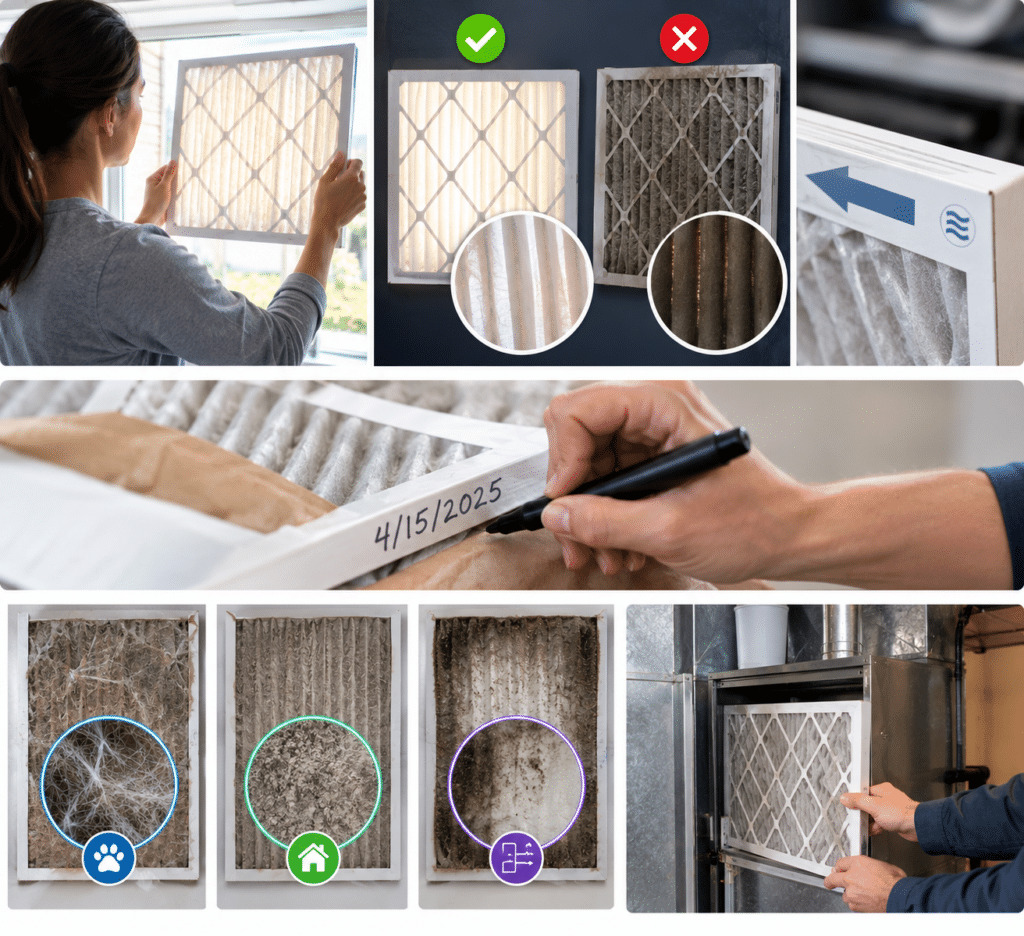
Pull the filter out and hold it up against a bright window or a flashlight. If light passes through the media evenly, it has life left. If the light is blocked across most of the surface, replace it. Color is a weaker signal than light transmission, because gray staining can appear early while the filter is still flowing fine.

Check the airflow arrow printed on the frame. It points toward the furnace, in the direction the air travels. A filter installed backwards still filters, but the reinforcing mesh ends up on the wrong side and the media can bow and collapse under pressure.

Write the install date on the cardboard edge with a marker. This removes the guessing entirely, and it is the single habit that keeps most homeowners on schedule.

Also look at what the old filter tells you. Heavy pet hair means shorten the interval. Fine gray powder with no visible fiber often points at duct leakage pulling attic or crawlspace air into the return, which is worth a conversation during a service visit. A filter that is dirty on the edges and clean in the middle usually means the filter is undersized for the slot and air is bypassing it.

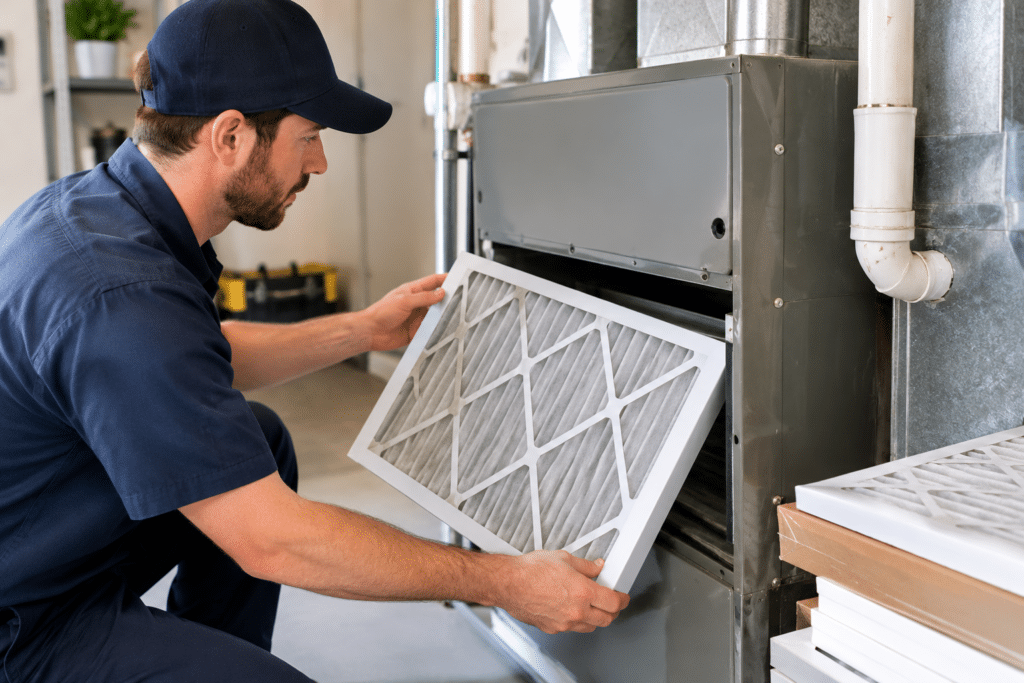
image 2

Where the filter fits in a Sacramento HVAC maintenance checklist

Filter changes are the homeowner’s job. The rest of an HVAC maintenance checklist belongs to a technician during an annual furnace tune up, ideally in October before the first cold week fills the schedule.

A proper tune up includes a heat exchanger inspection for cracks, burner cleaning and flame inspection, gas pressure and temperature rise readings, blower wheel condition, static pressure measurement across the system, safety control testing, thermostat calibration, and condensate drain checks on high efficiency units. Static pressure is the reading that ties directly back to filters. It tells the technician whether the duct system and filter choice are actually letting the furnace breathe, and it catches a problem that a visual inspection misses.

Heating efficiency is the payoff. A furnace with clean filters, correct static pressure, and clean burners delivers the capacity printed on its label. One fighting restricted airflow delivers less heat per therm and wears out sooner.

If you are seeing dusty vents, uneven room temperatures, weak airflow, or a furnace that shuts off before the house warms up, start with the filter. If a fresh filter does not fix it within a day, the problem is further inside the system. Clarke & Rush handles furnace repair and maintenance across Sacramento, Carmichael, Roseville, Elk Grove, and the surrounding area, and a diagnostic visit will identify whether the cause is airflow, a failing component, or duct design. Call 916-609-2665 to schedule.

Frequently asked questions

Check a one inch filter at 30 days and expect to replace it at 30 to 45 days during heating season. Pet hair mats on the filter face rather than working into the media, so it restricts airflow faster than ordinary household dust. A four inch media filter in the same house will usually run three to four months. If you are changing one inch filters monthly and finding them packed, moving to a media cabinet is worth pricing out.

Replace it at least twice a year even on light use. Filters collect dust from the room air whenever the blower runs, and the media itself degrades over time in a humid or dusty cabinet. A reasonable rhythm for a lightly used system is one change before heating season starts and one before cooling season starts.

It can, if the filter is too restrictive for the system. Higher MERV media resists airflow more, which makes the blower motor draw more power and run longer to move the same volume of air. The effect is small with MERV 11 in a correctly sized slot and can be noticeable with MERV 13 in a one inch slot on an older furnace. A technician can measure static pressure and tell you exactly how much headroom your system has.

Check it weekly while smoke is in the air and replace it whenever light stops passing through the media. Fine smoke particulate loads a filter far faster than normal household dust, and a filter that would normally last 90 days can be finished in two or three weeks. Running the fan in “on” mode during a smoke event helps clean indoor air, and it also means you are filtering continuously, so budget for the extra filters.

A fresh filter rules out the easiest cause and points at the next ones. Common culprits are a dust coated blower wheel, closed or blocked return grilles, disconnected or crushed flex duct in the attic, a failing blower capacitor, or ducts that were undersized when the system was installed. Static pressure readings at the furnace will show whether the restriction sits on the return side or the supply side, which narrows the repair quickly.


via Clarke & Rush Mechanical https://ift.tt/lLpEMTd

Tuesday, 25 August 2026

How an Air Conditioner Compressor Works


Have you ever thought about how your AC produces cold air when it’s extremely hot outside? If we tell you that it’s all thanks to the compressor, then you’ll proceed by asking – how does a compressor work on my air conditioning unit? And this is a very reasonable question to ask. 

Unheralded yet essential, the compressor is the brains of your air conditioner. Learning the operation of a compressor is fascinating and crucial since your comfort is riding on its tireless effort. Here, we’ll examine the many kinds of compressors and their processes, as well as the essential role they play in air conditioners to make your cool haven possible. 

Understanding the Compressor’s Role in Air Conditioning

You need to understand how the compressor works in order to learn how your air conditioner manages to keep you cool. Imagine your compressor as the heart of your air conditioning unit – it’s that element that circulates and pressurizes the refrigerant, enabling the transfer of heat and ultimately cooling your space. Let’s take a closer look at what it accomplishes.

Circulation & Pressure

The compressor in your air conditioner unit starts the process by compressing the refrigerant gas, which increases its pressure and temperature. The compressed and heated refrigerant then flows from the compressor into the condenser, where it releases its heat to the outside environment. This step enables the refrigerant to absorb the heat from your indoor air and lead it to cool your space. 

Maintaining the Pressure Differential

To ensure the refrigerant moves efficiently and heat transfer occurs smoothly, the compressor maintains the necessary pressure differential between the evaporator and condenser coils. Without this differential, the refrigerant won’t flow properly, and your unit will be unable to pump the coolness you depend on during hot weather.

Ultimately, taking care of your air conditioner compressor will ensure the overall health of the entire system. Avoiding routine inspections can result in the necessity for unnecessary repairs or replacement of the many issues that compressors may cause when no maintenance is done.

How Does a Compressor Work?

When you turn on your air conditioner, the compressor goes through a few crucial steps. Let’s take a closer look at each step to help you better understand how it functions. 

Intake Stage

  • At first, your air conditioner’s compressor performs the function of a massive vacuum. 
  • It takes in vaporized refrigerant from the unit’s evaporator coils. 
  • The vapor is ready to go to the next stage of its trip since its temperature and pressure are both low right now – just like taking a deep breath in before releasing a forceful breath out.

Compression Stage

Well, the compression stage is where the compressor of your air conditioner does its magic, that is, it reduces the volume of the refrigerant vapor. Let’s dissect it further:

  • Several types of compressors use reciprocating pistons or revolving blades to decrease the volume of refrigerant vapor.
  • When the volume of the vapor decreases, an increase in pressure and temperature occurs. This crucial rise is analogous to how pinching a balloon causes the air inside to heat and become pressurized due to reduced available space.
  • Through the perpetual rotation of helical screws, rotary screw compressors accomplish this. Pistons produce a pulsating motion in contrast to a reciprocating compressor.

Discharge Stage

After compression, the gas must enter the surroundings at high pressure and temperature. This is the crucial step that sets the stage for the efficient transfer of heat. Here’s how this goes:

  • The exhausted gas discharges through a valve opening.
  • At its current stage, the gas is still not in the best condition to efficiently cool your space. Thus, heating devices such as intercoolers and external systems come into play to help extract the excess heat content.
  • This cooling function is necessary not only to provide you comfort but also to prevent the compressor from overheating or damage that could be due to wear.

Common Compressor Types Used in Air Conditioning Units

Naturally, different air conditioner units use different compressors, each with its own pros and cons. Let’s break down the three most commonly used types:

  • Reciprocating Compressors. These compressors have piston and cylinder placements compressing the refrigerant. They’re often used for their reliability and capability to handle high pressure. However, they’re also noisy and consume more energy than any other type.
  • Rotary Compressors. The unit used by rotary compressors is a spin mechanism, which is responsible for compressing the refrigerant. They are versatile, fuel-efficient, and far less noisy than other compressors.  You’ll find them in all types of cooling systems – ranging from air conditioning units to high-efficiency ones.
  • Scroll Compressors: Scroll compressors consist of two interlinked spiral spirals through which refrigerant passes. They boast high efficiency, reliability, and noise reduction. But most importantly, they’re highly durable, which is why many households and commercial air conditioning systems prefer them. 

Compressor Capacity and Efficiency

Choosing the perfect air conditioning unit is all about selecting a top-notch compressor with the right balance of capacity and efficiency. So, what’s up with compressor capacity and efficiency? 

Capacity refers to its ability to remove heat from a space and cool it down, that is, how many British Thermal Units (BTUs) it can remove from the air in an hour. Efficiency, on the other hand, is the compressor’s ability to cool your space while minimizing energy consumption. 

When picking out a compressor, you need to consider its capacity in tons and BTU (British Thermal Units) per hour. Here’s the deal – choosing the correct capacity for your space guarantees you’ll have the best, most comfortable air. If the temperature is set too low, your space will remain warm, but if it’s too high, you’ll waste energy as your unit works overtime.

When you’re out shopping for a compressor, make sure to pay attention to the Seasonal Energy Efficiency Ratio (SEER) rating. Yeah, it might be a little more expensive initially, but the long-term energy savings make it worth the investment. 

Common Problems With Air Conditioning Compressors

Think of your air conditioner’s compressor just like any superhero who may encounter some challenges. Here’s a simple guide to common compressor issues:

  • Compressor Not Turning On. If your air conditioner isn’t turning on, it could be because of a finicky thermostat, a blown fuse, or a tripped circuit breaker. At times, they simply require a quick reset or replacement.
  • Running But Not Cooling. Your air conditioner could be experiencing a refrigerant leak, a clogged filter, or a worn-out condenser coil. In such cases, it’s best to call in the professionals for a comprehensive check and repair.
  • Loud or Unusual Noises. If your air conditioner starts making strange noises, it’s best to call in the professionals. Strange sounds coming from the compressor, fan, or other components require a thorough diagnostic and repair.
  • Compressor Short Cycling. Is your compressor behaving like it’s on a roller coaster? Short cycling can occur due to a faulty thermostat, low refrigerant levels, or an excessively large compressor. Leave it to the experts to take care of the diagnosis and adjustments for a hassle-free experience.

Routine maintenance and care can prevent the majority of compressor faults. It’s good to clean or replace the air filters frequently, keep the outdoor unit clear of debris, and schedule your annual maintenance checkup with a technician once a year.

Get The Best HVAC Contractor in Sacramento, California

Finally, we’ve covered the answer to “How does a compressor work on my air conditioning unit?” by examining this essential component that brings cool air into your home. We have explored the integral part’s inner workings via the three phases of intake, compression, and discharge, revealing its simplicity and complexity.

If you carefully follow the maintenance tips for your air conditioner compressor, you’ll ensure that it stays a reliable friend in the heat and works at its best for many years. But if you need AC repair or help with picking an air conditioning unit, contact the HVAC professionals at Clarke and Rush.

In our role as a five-star rated Sacramento’s go-to home performance HVAC contractor, we promise never to compromise on the quality of service our customers expect. So why wait? Request an appointment today and have a cool house all summer long!

What Is the 20 Degree Rule for Heat Pumps?

Quick Answer: There's no single 20 degree rule for heat pumps. The phrase refers to three ideas: keeping the thermostat within about 20...