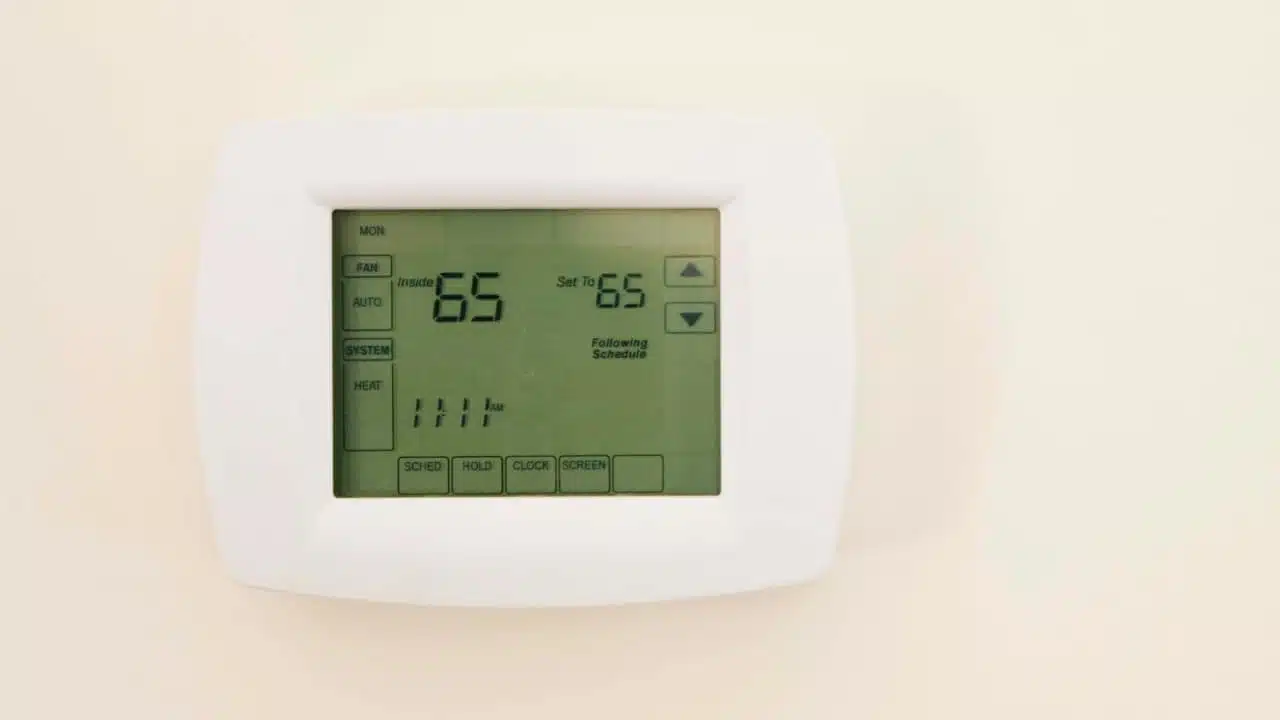
Quick Answer: To tell a thermostat problem from a heating system problem, raise the setpoint a few degrees and watch the equipment. If nothing happens, the thermostat, its power, or its wiring is the likely cause. If the equipment starts and then quits, or runs without heating, the thermostat did its job, and then you will need to schedule HVAC service.
Key Takeaways
- A thermostat only sends a signal. If the equipment answers that signal, the thermostat is usually working.
- A blank screen is most often dead batteries or lost power, and lost power can start at the furnace, not the thermostat.
- A furnace or heat pump that starts but doesn't heat has a problem in the equipment, ducts, or airflow.
- Some faults, like a tripped drain switch or an open furnace door switch, make a working thermostat look dead.
You can usually tell whether the thermostat or the heating system is at fault in a few minutes, by checking whether the equipment responds when the thermostat calls for heat. That one check sorts most cases. The rest of thermostat troubleshooting is narrowing down why the signal isn't getting through, or why the equipment isn't doing anything useful with it.
Both problems leave the house cold, but they lead to very different fixes. Clarke & Rush handles HVAC repair across the Sacramento region, including no-heat problems on both sides of the thermostat wire.
The quick test: does the equipment respond?
The fastest way to separate a thermostat fault from a heating system fault is to raise the setpoint and listen at the equipment. A thermostat is a switch with a temperature sensor. When the room drops below the setpoint, it closes a low-voltage circuit, usually powered by a transformer in the furnace or air handler, and the equipment takes it from there. Everything after that signal, including ignition, heat, airflow, and safety shutdowns, belongs to the heating system.
- Set the thermostat to HEAT and the fan to AUTO.
- Raise the setpoint three to five degrees above the current room temperature.
- Go to the furnace or air handler and listen for a minute or two. On a gas furnace you should hear the draft inducer fan, then the ignitor, then the burners and blower. On a heat pump, the outdoor unit should start and the indoor blower should run.
If nothing happens at all, the call for heat probably isn't reaching the equipment, and the thermostat, its power, or its wiring moves to the top of the list. If the equipment starts its sequence, the thermostat is doing its job. Whatever happens next, such as burners that light and go out, a blower that runs with no heat, or an outdoor unit that runs while the house stays cold, is a heating system problem.
Signs the thermostat is the problem
The thermostat is the likely problem when the screen is blank or frozen, the temperature reading doesn't match the room, or the equipment never responds to a change in settings.
The Clarke & Rush thermostat repair page lists the common causes:
- A blank or unresponsive screen, often from dead batteries, a tripped breaker or blown fuse, or a wiring disconnect at the control board
- A temperature reading that's off because the thermostat sits in direct sun or near a vent, has dust in its sensor, or has drifted out of calibration
- A system that doesn't respond, from loose wiring, a faulty relay, or a smart thermostat that isn't compatible with the equipment
- Short cycling or nonstop running from a bad sensor, poor placement, or a communication problem
Settings can mimic a fault too: a thermostat on COOL or OFF, a schedule that lowered the setpoint, or a fan set to ON, which blows room-temperature air between heating cycles.
When a Honeywell display goes blank
A Honeywell thermostat blank screen usually means the thermostat has lost power, and Honeywell's own steps start with the simplest fix.
Honeywell's support guidance for blank displays works through it in order. If the thermostat runs on batteries, replace them. If it's wired for continuous power from the heating system, try putting batteries in to see whether the screen comes back. If it powers up on batteries, the thermostat is probably fine and the system isn't sending it power, so check the breaker, the furnace power switch, and the furnace door switch. If it won't power up even with fresh batteries, or it only works on batteries while the system has power, Honeywell says you may need a technician.
The same logic applies to most digital thermostats: a blank screen points to power first, and the power problem often starts at the furnace or air handler.
Signs the problem is in the furnace
A gas furnace is the likely problem when the thermostat calls for heat, the furnace starts its sequence, and then it fails to light, shuts off early, or blows cool air.
A furnace not heating properly while the thermostat works fine usually traces to the furnace's own parts. The Clarke & Rush furnace repair page names the common ones: a failed ignitor, a dirty flame sensor that shuts off the gas within seconds of ignition, a tripped limit switch from a clogged filter and restricted airflow, an interrupted gas supply, or a safety switch that has shut the furnace down on purpose.
Burners that light and go out within seconds point toward the flame sensor. A furnace that runs a few minutes and shuts off with the blower still going points toward overheating and airflow. A blinking status light on the control board often gives a code; many furnaces print the code chart inside the door.
If you smell gas, don't troubleshoot. Leave the house, and call 911 or your gas utility from outside.
Signs the problem is in the heat pump
A heat pump is the likely problem when the outdoor unit and indoor blower run but the house doesn't warm up, the outdoor unit stays covered in ice, or backup heat runs constantly.
Common heat pump problems listed on the Clarke & Rush heat pump repair page include refrigerant leaks, a failed reversing valve that leaves the system stuck in cooling, defrost control failures, thermostat faults, and compressor issues. Restricted airflow and faulty sensors can also cause icing.
Heat pump air feels cooler to the hand than a gas furnace's, even when it's heating normally, so lukewarm air isn't proof of a problem. A house that falls behind the thermostat is. Thermostat setup also matters more with a heat pump: one configured for the wrong system type can call for cooling when it should heat, or bring on backup heat more often than needed.
Problems that can look like either one
Some faults sit between the thermostat and the heating system, and they make a working thermostat look broken or a working furnace look dead.
The most common is lost low-voltage power. The 24-volt circuit that powers many thermostats starts at a transformer in the furnace or air handler and passes through switches that can cut it:
- The furnace door safety switch cuts power when the blower compartment panel isn't fully seated, which often happens after a filter change.
- On some systems, a float switch in the condensate drain pan cuts power when the drain backs up, to keep water from overflowing. The thermostat goes blank, and the real problem is a clogged drain line.
- A small fuse on the furnace control board can blow when a thermostat wire shorts, which can cut power to the thermostat until the fuse and the short are fixed.
- A loose or damaged thermostat wire anywhere between the wall and the equipment can interrupt power or the call for heat.
A thermostat that works on batteries but not on system power is a useful clue: the thermostat is probably fine, and the power problem is upstream.
This quick guide shows which side of the system each common symptom usually points to.
| What you notice | Likely side | Common causes |
| Screen blank or frozen | Thermostat or its power | Dead batteries, tripped breaker, furnace door switch, drain float switch, blown control fuse |
| Screen works, equipment never starts | Thermostat, wiring, or controls | Wrong mode, wiring fault, failed relay, incompatible smart thermostat |
| Reading doesn't match the room | Thermostat | Sun or vent nearby, dust, calibration drift |
| Furnace starts, then shuts off or blows cool air | Furnace | Ignitor, flame sensor, limit switch, airflow, gas supply |
| Heat pump runs, house stays cold | Heat pump | Refrigerant leak, reversing valve, defrost failure, airflow |
| Backup heat runs often in mild weather | Thermostat setup or heat pump | Configuration, or a heat pump not delivering full output |
What makes this harder to sort out in Sacramento homes
In the Sacramento region, the equipment and its switches are often in the attic, which makes the problems that cut thermostat power harder to spot from inside the house.
California homes rarely have basements, so many furnaces and air handlers in Sacramento, Roseville, Elk Grove, and Folsom sit in an attic, a garage, or a closet. When the equipment is in the attic, a clogged condensate drain or a tripped float switch is out of sight, and the only symptom downstairs may be a blank thermostat. The Clarke & Rush furnace repair page notes that an attic furnace spends the summer in extreme heat even when it isn't running, which is hard on wiring and electronic components, so the first heating call of the season is a common time for these problems to surface.
A home that recently switched from a furnace to a heat pump, which SMUD and Roseville Electric incentives encourage, may also still have a thermostat that isn't set up for it.
Safe checks to try first
These checks are safe for any homeowner and don't require opening the furnace's burner compartment or the electrical panels inside the equipment.
- Confirm the thermostat is set to HEAT, the setpoint is above room temperature, and the fan is on AUTO.
- Replace the thermostat batteries if it uses them, even if the screen still shows something.
- Check the breaker for the furnace or air handler, and the power switch near the equipment, which often looks like a light switch.
- Make sure the blower compartment door on the furnace or air handler is fully closed.
- Look for water around the indoor unit or a full drain pan, which can point to a tripped float switch.
- Replace the air filter if it's dirty.
- Run the quick test above and note whether the equipment responds.
Don't open the thermostat's wiring, the furnace control board, or the burner area, and don't bypass any switch. If these checks don't restore heat, the problem needs a technician with a meter.
When to call for HVAC repair
Call for service if the thermostat stays blank with fresh batteries and the breakers on, the equipment never responds to a call for heat, the furnace starts and then shuts down, the heat pump runs without warming the house, or you find water around the indoor unit.
When you call, say what the thermostat shows, whether the equipment responds when you raise the setpoint, and what you hear or see at the furnace or outdoor unit. Those details tell a technician which side of the system to start on.
Start with the signal, then follow the equipment
The thermostat and the heating system fail in different ways, and the equipment's response tells you which one to look at. A blank or ignored thermostat usually means a power or wiring problem, and that problem often starts at the furnace. Equipment that starts but doesn't heat points to the furnace or heat pump itself. A few minutes of checking batteries, breakers, the furnace door, and the filter can save a service call, and when it doesn't, it gives a technician a head start on the HVAC repair.
Frequently Asked Questions
Why is my thermostat screen blank?
A blank screen usually means the thermostat has lost power. Start with fresh batteries if it uses them. If it's wired for system power, check the breaker, the furnace power switch, and the furnace door panel. On some systems, a full condensate drain pan trips a switch that cuts power to the thermostat. If the screen stays blank after those checks, a technician should test the wiring and controls.
How do I know if my thermostat is bad?
Raise the setpoint a few degrees and see whether the heating equipment starts. If the screen works but the equipment never responds, and power, settings, and breakers check out, the thermostat or its wiring may have failed. A reading that doesn't match a separate thermometer, or a thermostat that restarts on its own, are other signs. A technician can confirm it by testing the signal at the equipment.
Can a bad thermostat make my furnace stop heating?
Yes. A thermostat that loses power, misreads the room, or has a wiring fault can stop calling for heat or end heating cycles early. But a furnace not heating while the thermostat calls for heat normally is usually a furnace problem, such as a failed ignitor, a dirty flame sensor, or a tripped limit switch. Watching whether the furnace starts tells you which one to look at.
Why does my heat pump run but the house stays cold?
The heat pump may have a refrigerant leak, a reversing valve stuck in cooling, a defrost problem, or restricted airflow. It may also be working normally on a mild day, since heat pump air feels cooler than furnace air. If the house can't reach the thermostat setting, or the outdoor unit stays iced over, have the system checked. These heat pump problems need a technician's tools to diagnose.
Should I replace my thermostat if it's old?
Age alone isn't a reason, but replacement is worth considering for thermostats 10 to 15 years old, units with repeated failures, damaged screens, or smart thermostats that aren't compatible with the equipment. A new thermostat won't fix a furnace or heat pump problem, so confirm where the problem is before buying one.
Does a smart thermostat need special wiring?
Many do. Smart thermostats often need a common wire, called a C-wire, to supply continuous power from the heating system. Without one, some models lose power, restart, or drain their batteries. If a new smart thermostat goes blank or behaves erratically, the wiring is one of the first things to check. A technician can add a C-wire or an adapter where needed.


No comments:
Post a Comment